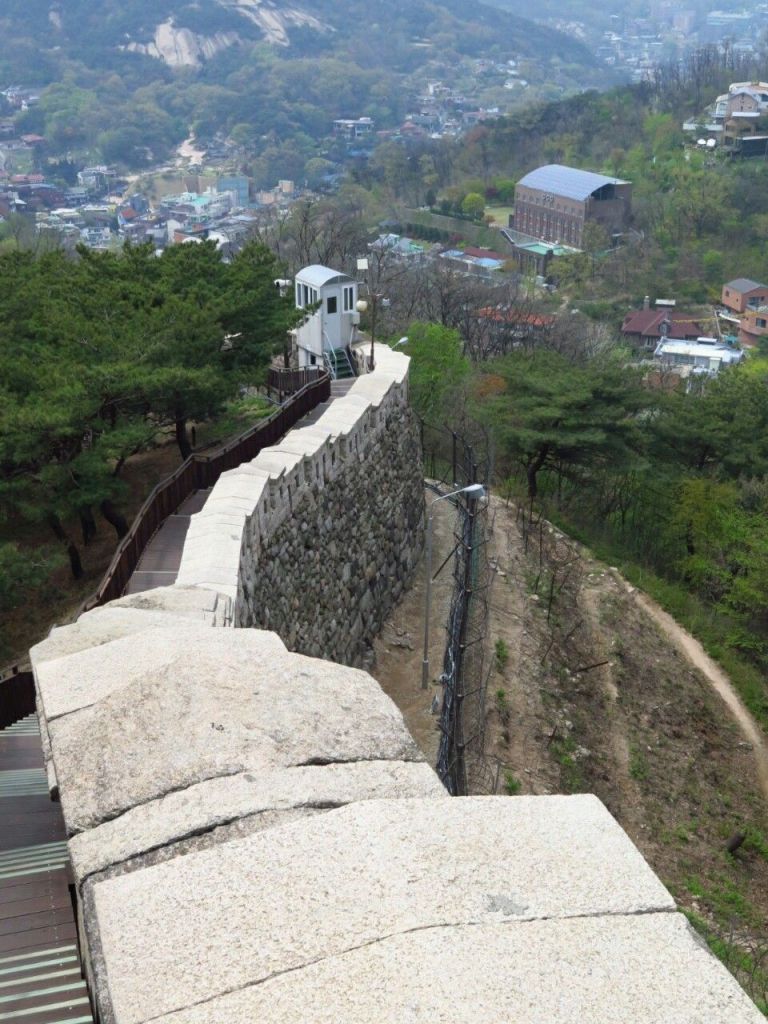
The heart of Seoul is defined by the city’s Ancient Wall, built in 1396. Much of it was deconstructed as the city grew, and stone fortifications proved to be a barrier to traffic flow. But many sections remain, providing some great hiking opportunities.
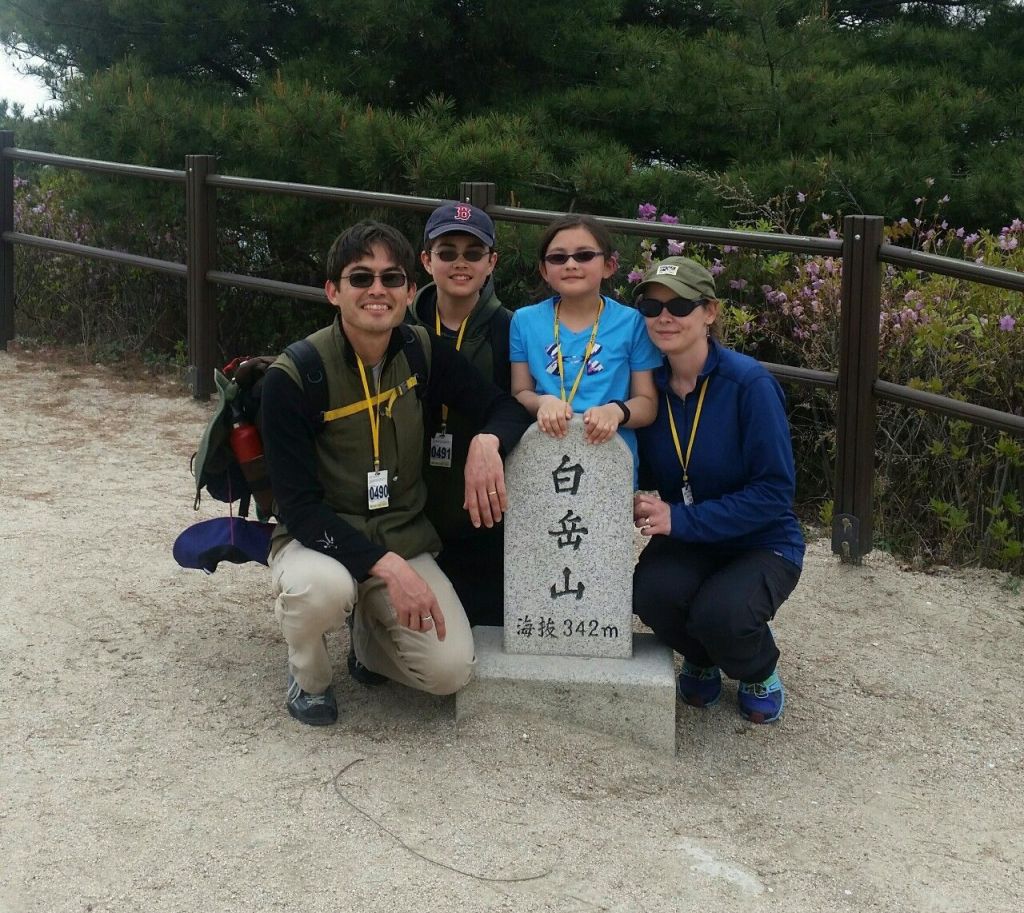
We’ve spent most of our time in Seoul within the boundaries of the wall, but today was our chance to hike a section of the archaic defensive perimeter itself. Originally the wall had 8 gates, and sections are defined by the gates they connect. We chose a section between Hyehwamun and Changuimun gates, called the Baegak Mountain Trail. This section includes Mount Baegak, highest point on the ancient wall at 1123 feet.
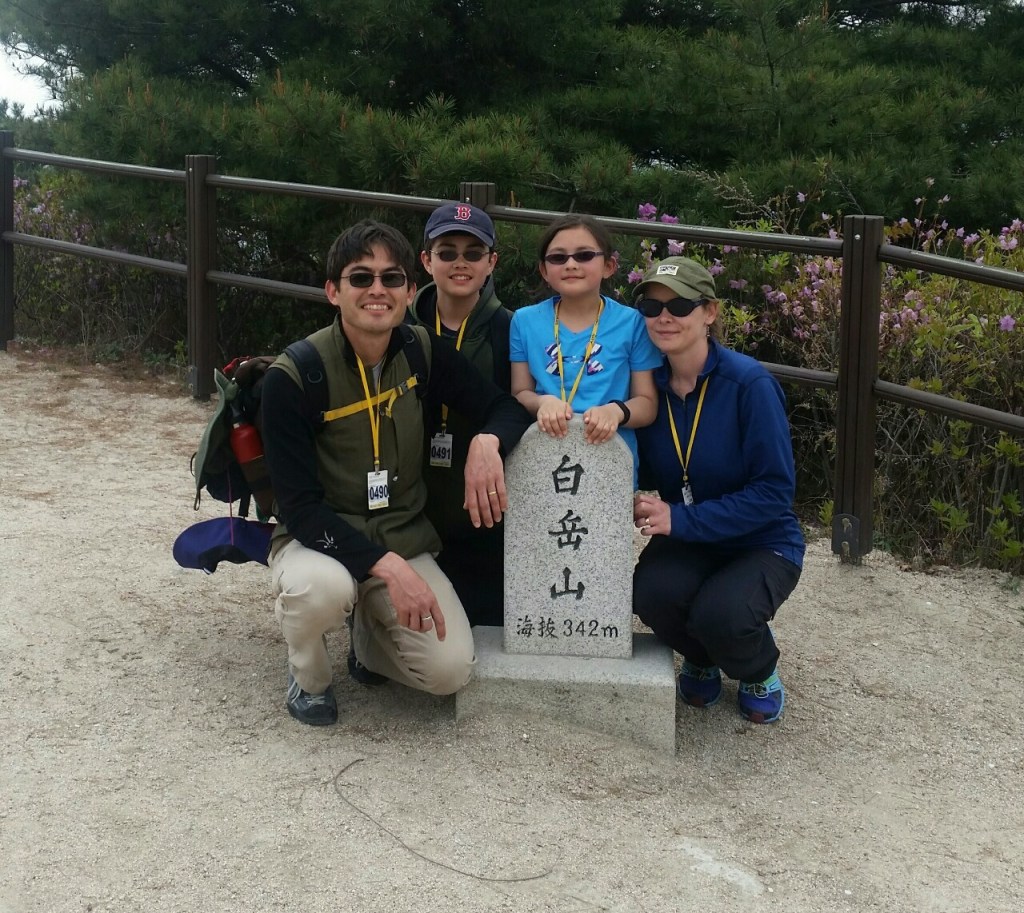
Most of the trail is a secured military zone, so you have to show your passport and register to enter. Guard posts and cameras monitor your progress, most photography is prohibited, and “guides” are stationed every 100 yards or so should you have a question or forget the rules. This part of the trail overlooks Korea’s Blue House, their equivalent of the White House, and in 1968 was the path of infiltration by North Korean special forces aiming to assassinate the president, so the security is understandable. Soldiers in full combat regalia and chunky FN FAL assault rifles patrol, and small outposts with radar and other sensors abound.
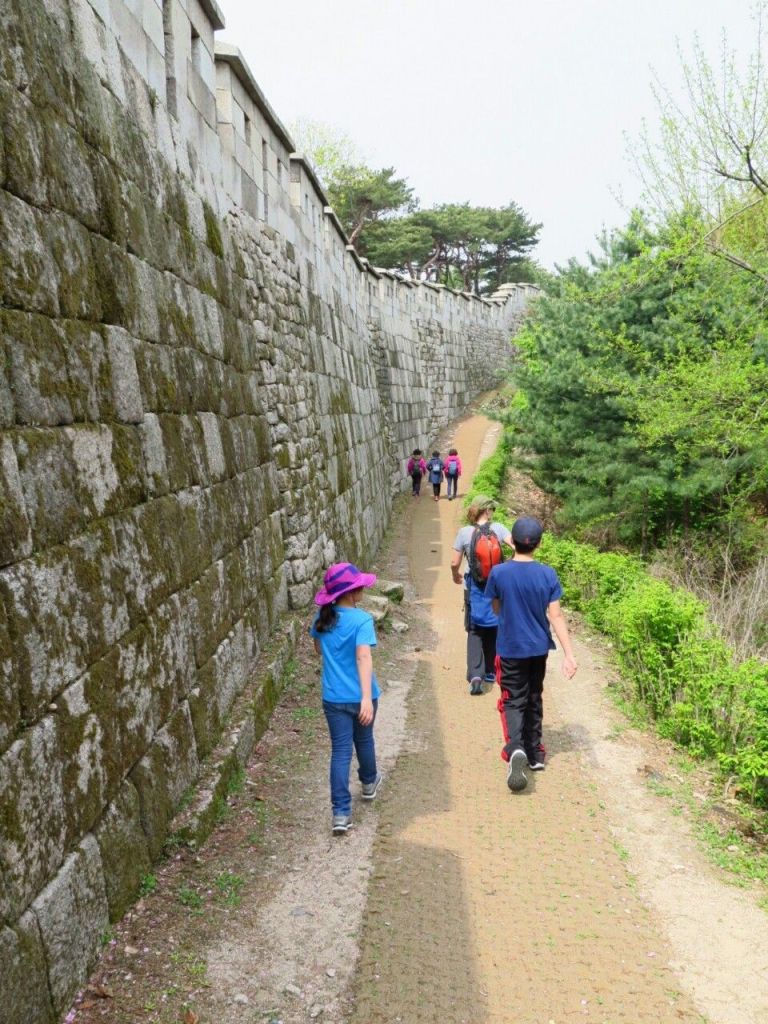
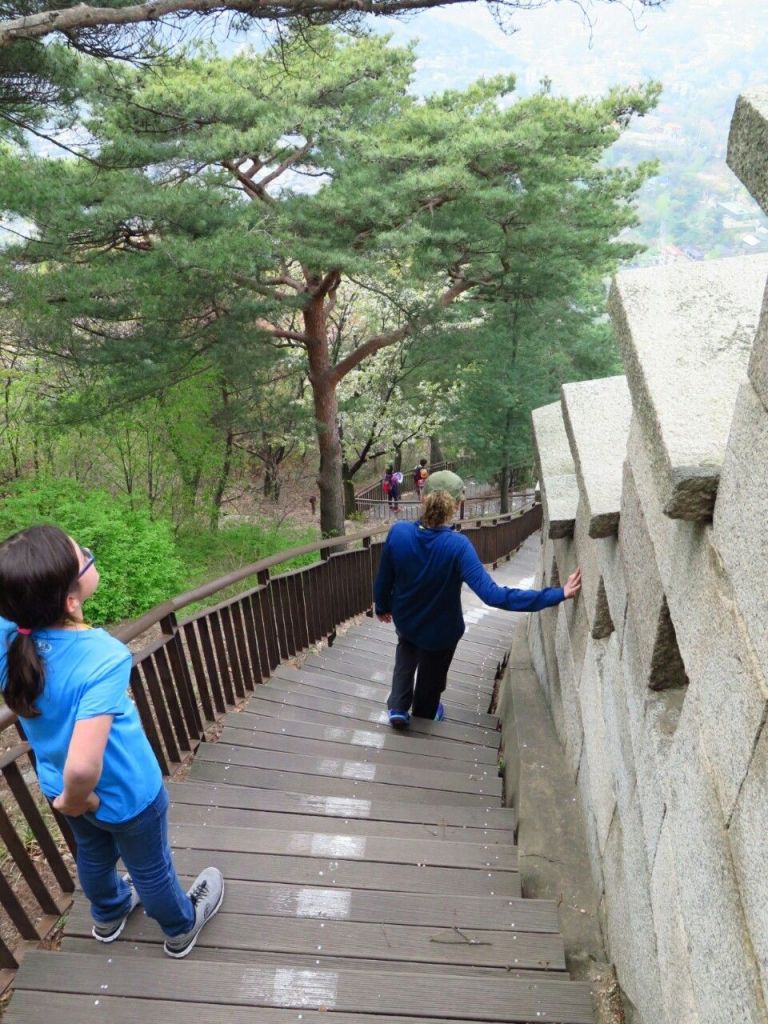
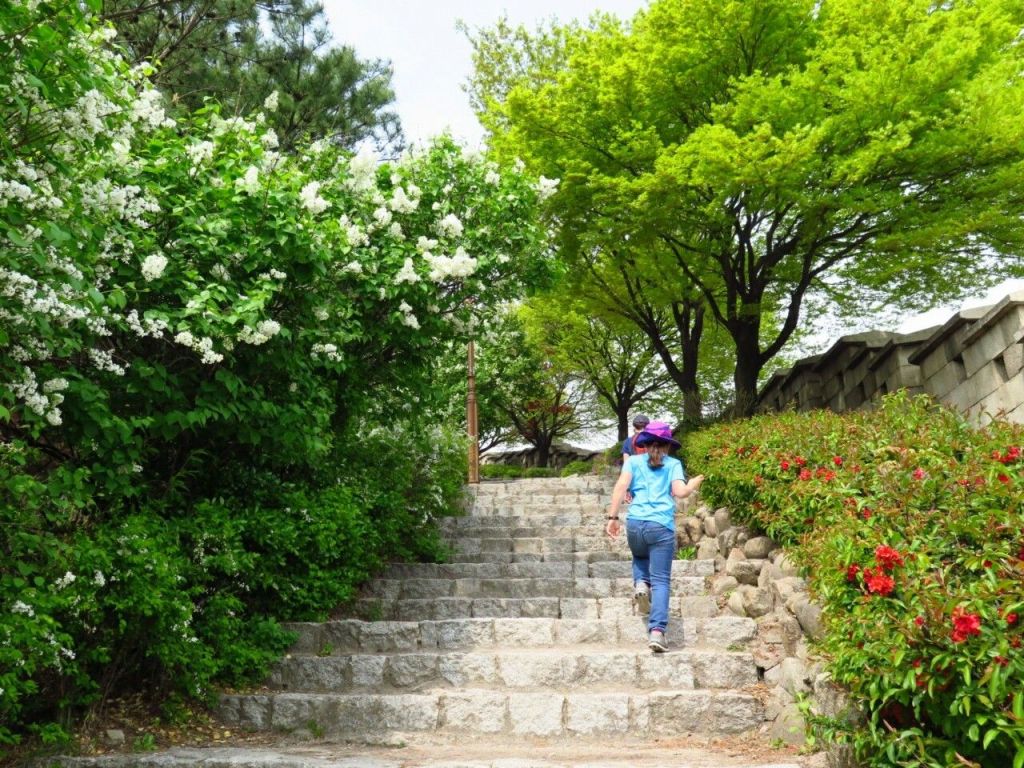
It was a steep piece of trail with lots of steps to assist you. Tens of thousands of steps. Vibrant with flowers in bloom, and a light stream of local hikers in their excellent hiking attire.
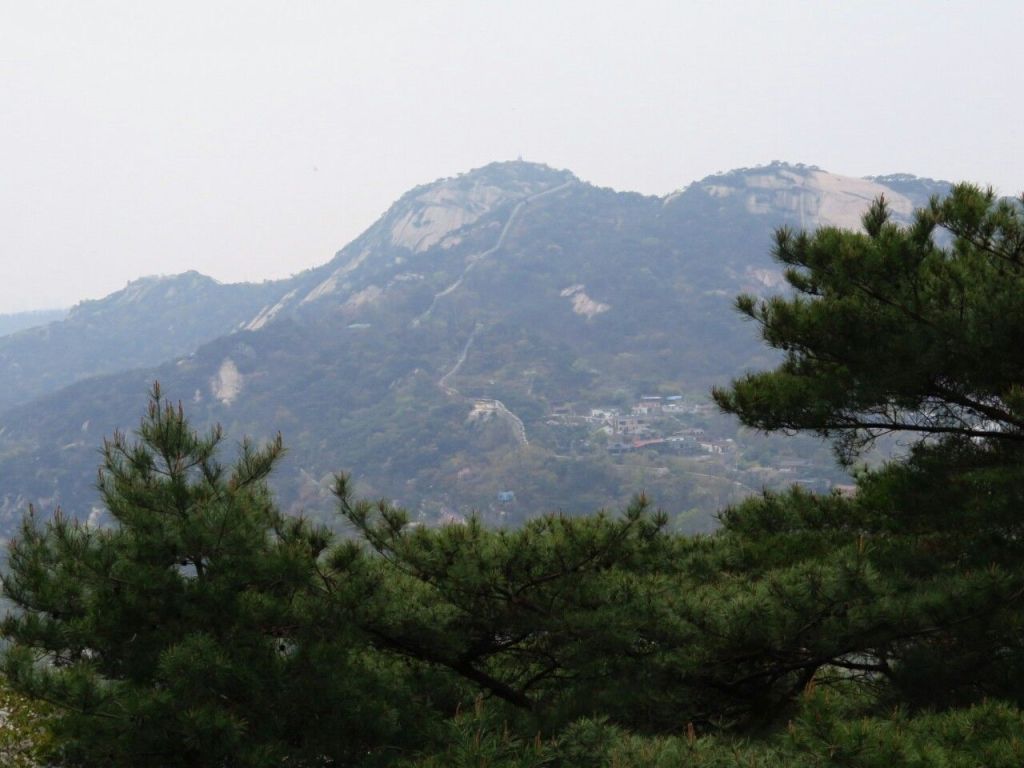
Great views at every corner, sometimes to the north, sometimes to the south.
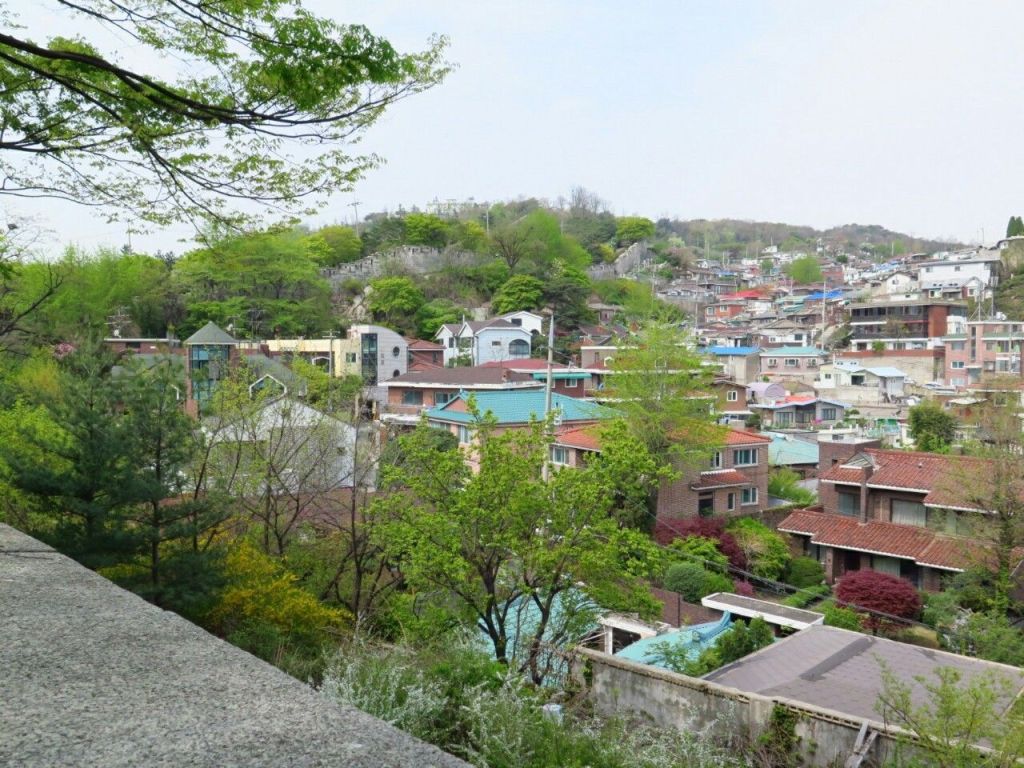
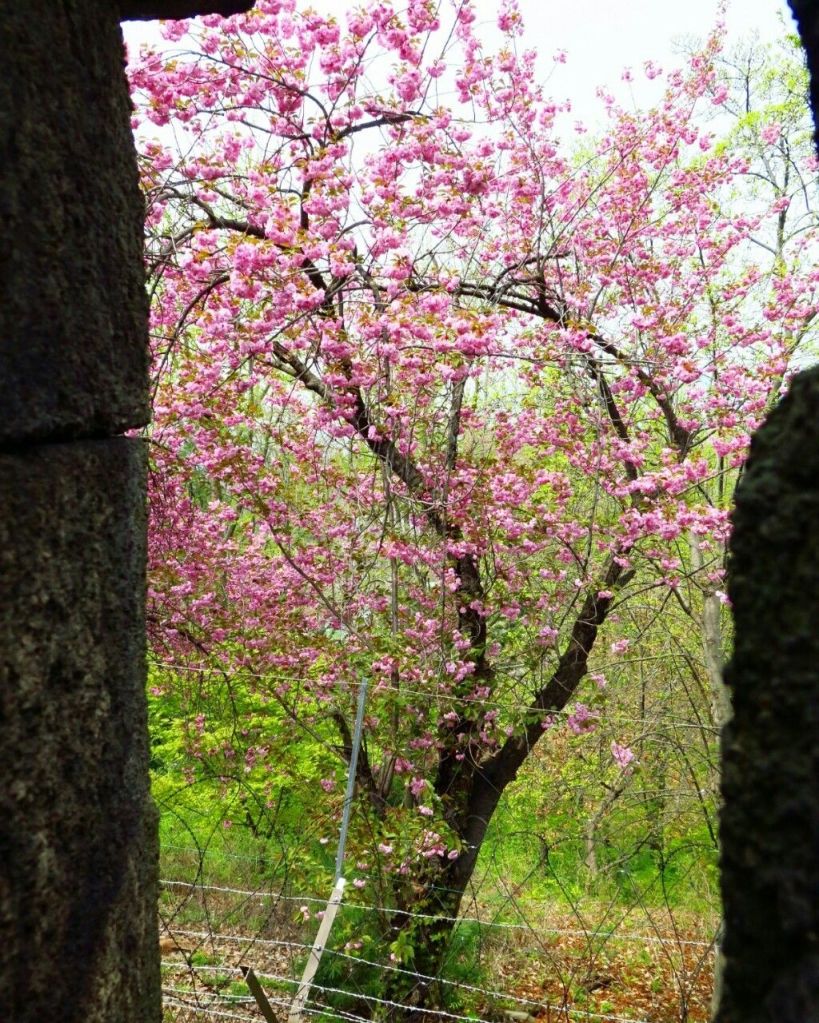
Before entering the restricted area, modern housing and roads creep right up to the base of the wall. Once in the restricted area, this wall built over 600 years ago retains its original function as guardian of the city and the nation. Copious razer wire, cherry blossoms and fragrant lilac.
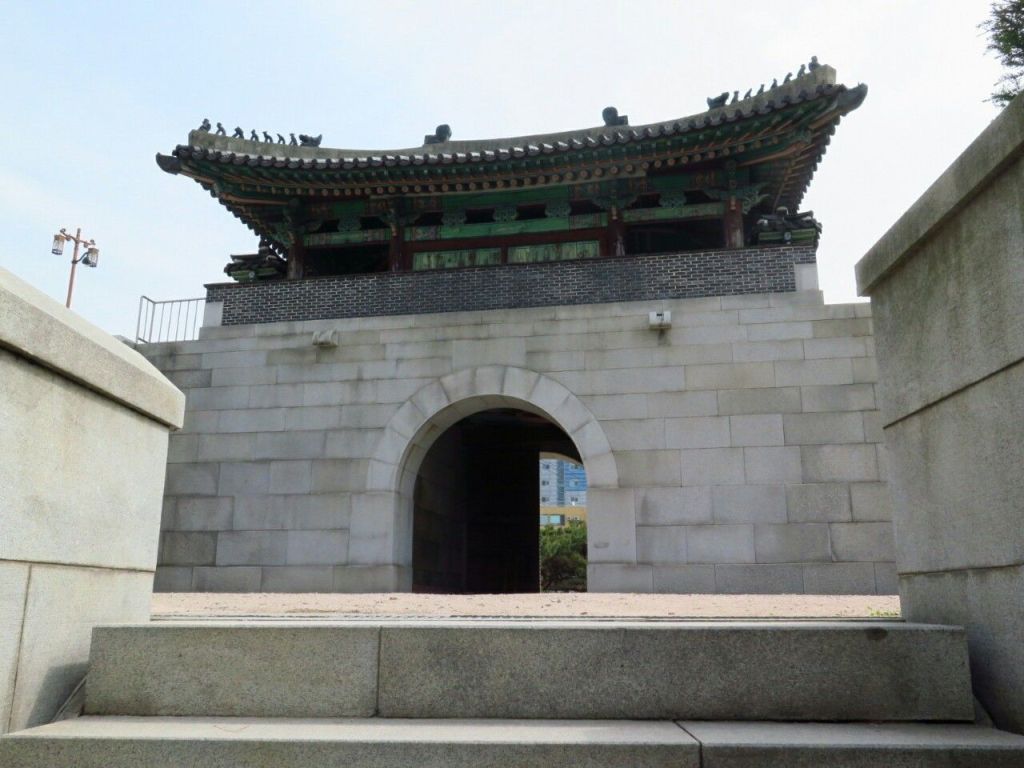
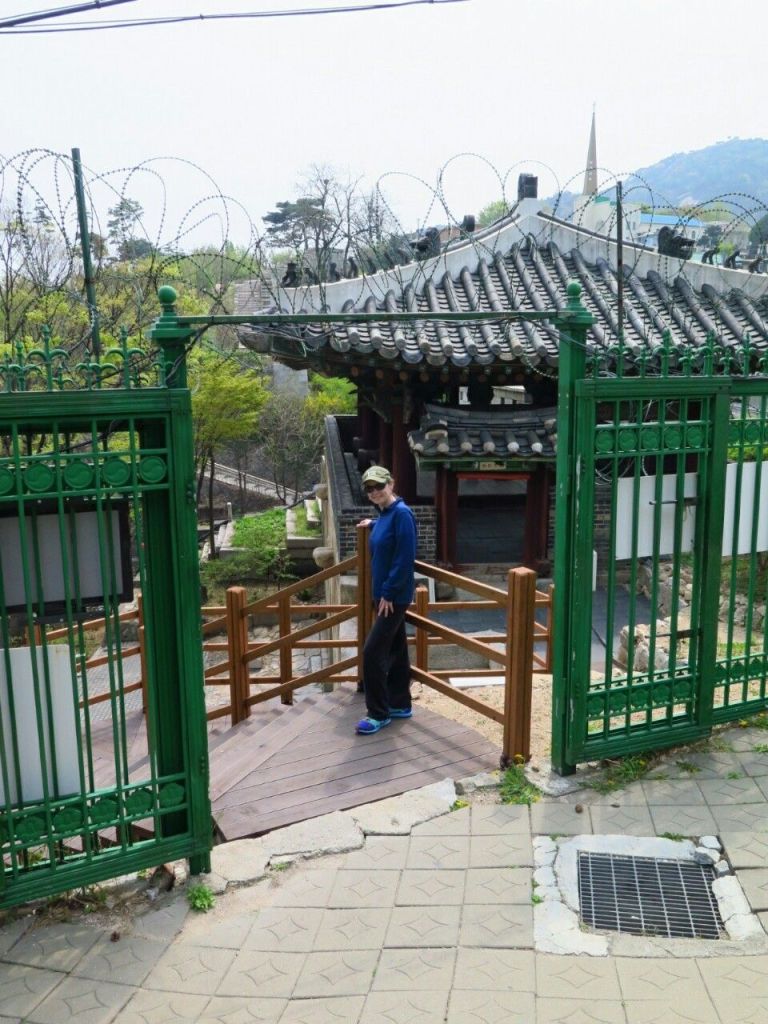
From the massive stones of our start at Hyehwamun Gate, to the coiled wire where we left the trail at Changuimun Gate, a path of contradiction and coexistance of peace and warfare, past and present.
 Home on the Roam
Leave a comment