“A Sanctuary of National Lament” is how Korea’s national war memorial is described. And it is powerful.
The grounds are well seeded with the expected equipment of war: aircraft, tanks, artillary pieces from several generations. Inside, the museum spans millenia: Ancient artifacts of war segue into the modern era via the usual means. Static dioramas interweave with physical artifacts and technology enhanced displays.
The Korean War dominates, of course. This is a nation freshly forged from a cataclysmic inferno barely a generation ago, a war that never ended. Manditory military service and the most fortified border on our violent planet keeps the wounds fresh. Before we left for this trip a new set of provocations by the North ratcheted up tensions, as they periodically do.
The Korean War is part of my personal history as well, and the national war memorial was a strong reminder of that. My grandmother was Korean, a child living in Japan when the Americans invaded at the end of WWII. She returned to Masan Korea (in the South, near Busan), in time for the fresh spasm of suffering that was the Korean War. My mother came of age in the immediate and despairing aftermath. The war and its consequence are a distant prominence in the geologic topography of the Yi-now-Lobb family lore: Large beyond measure, somewhat lacking precision, and filled with still-vivid vistas slowly changing and fading over time. But it carved a landscape for the orchard of my family tree.
My connection to this and all war is the civilian perspective, especially that of familly and friends who lived through it. I have never served in the military, have no familly tradition of service. The American relationship with its service men and women, and how we deploy and support them both during active service and as veterans is rife with contradictions. Contradictions with deep human cost that further obscure clarity and understanding of human kind’s most self destructive pursuit.
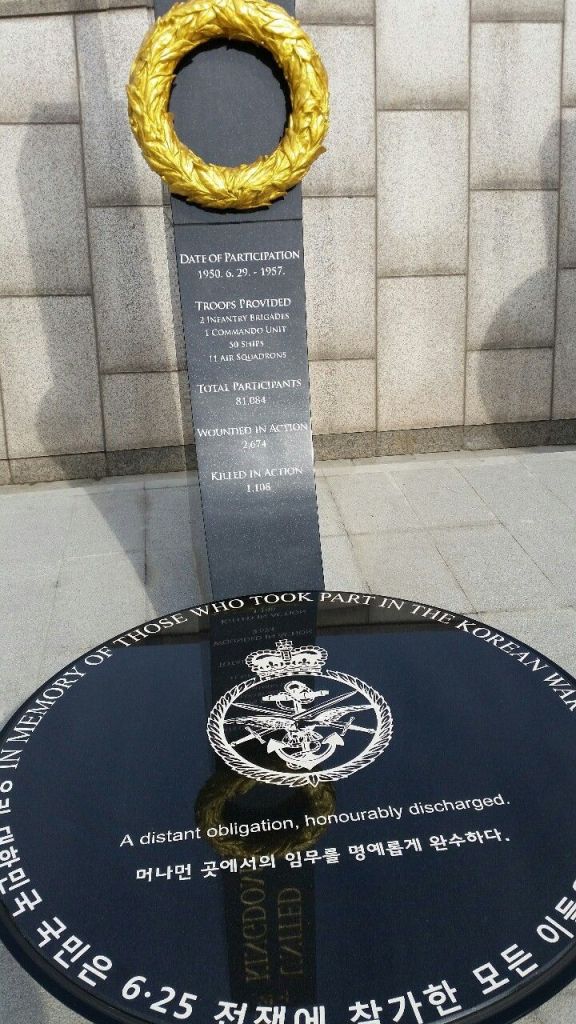
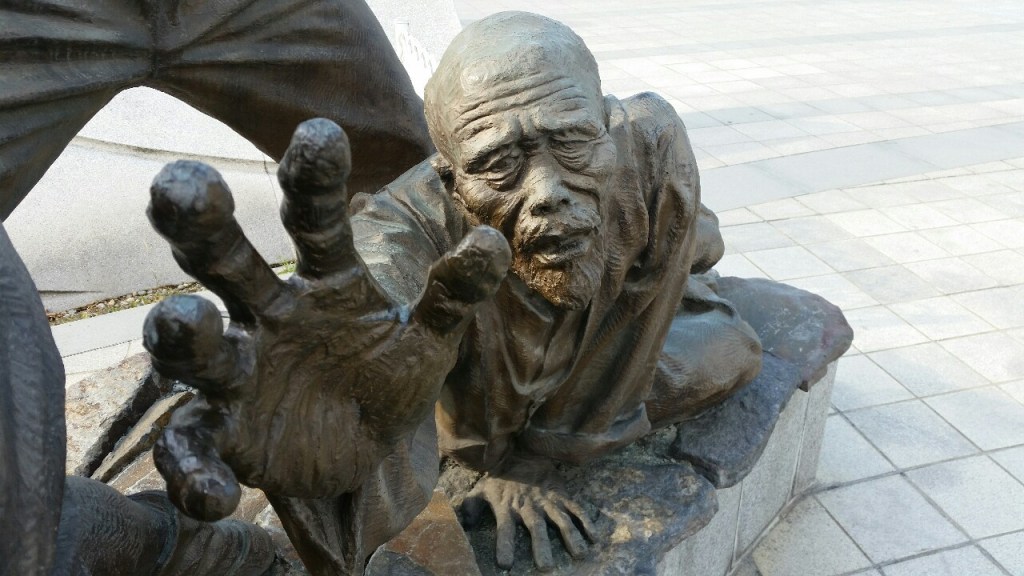
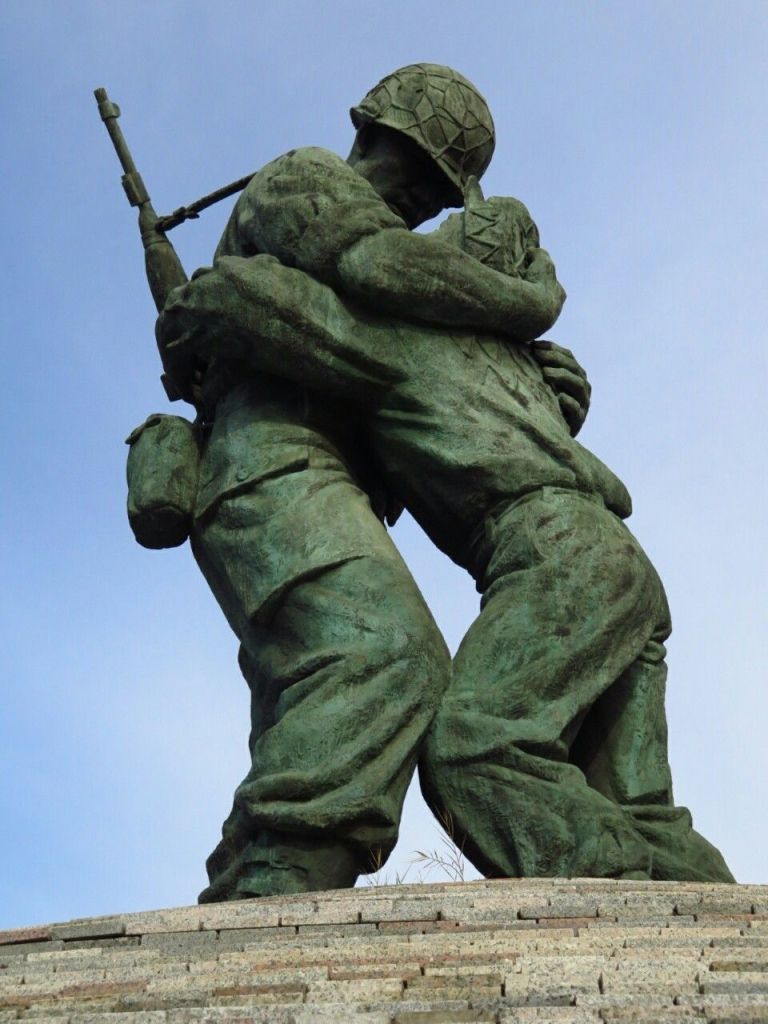
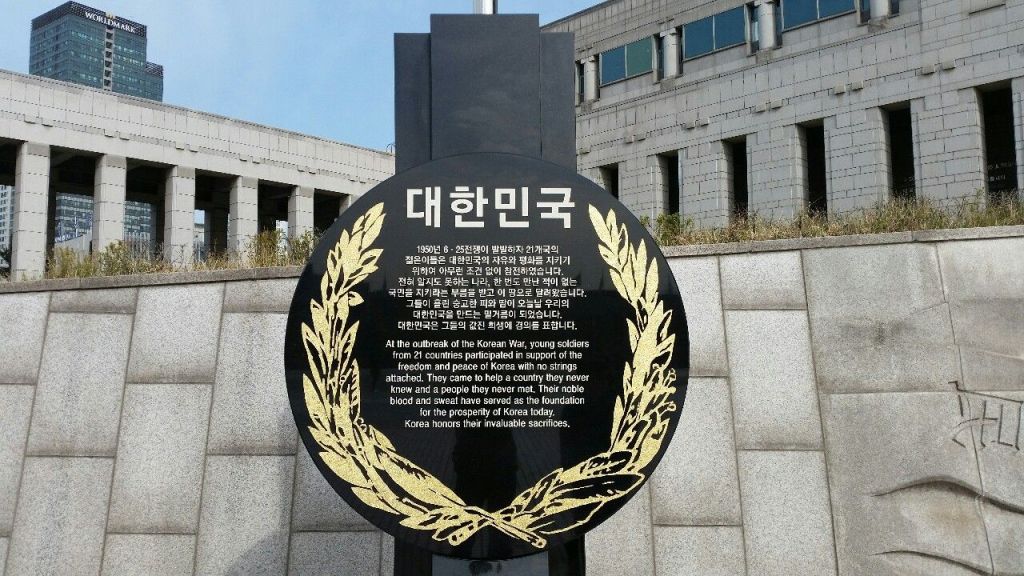
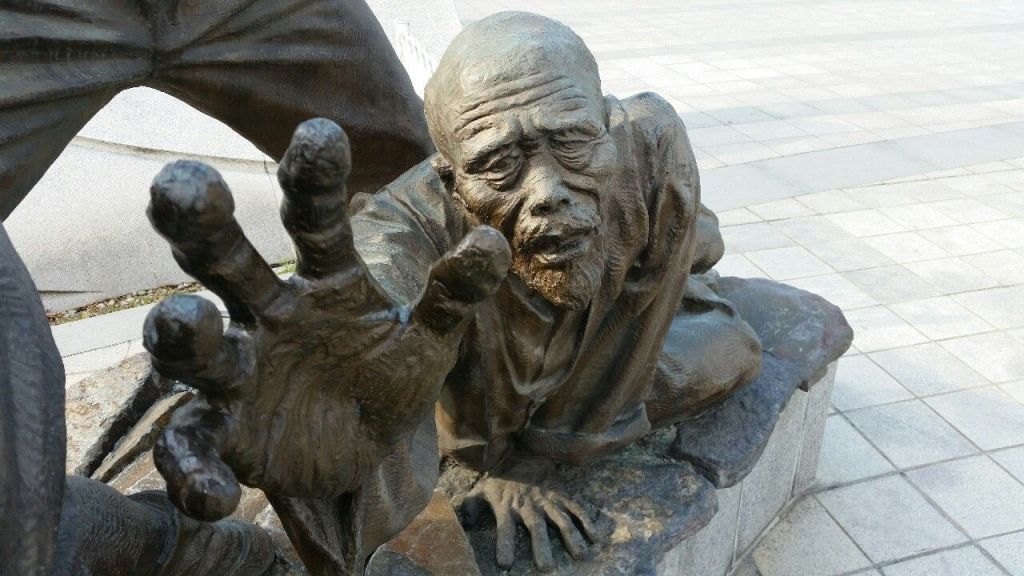
Korea’s sanctuary of national lament hits deepest before you enter the building, or reach the machines of war. Three large monuments evoke the sacrifice, courage and suffering, with dignity and intensity. That soldiers give to each other and their objective inmeasurably, and that civilian strength is tested by suffering beyond comprehension are not new lessons. But the vast international scope of Korea’s “Forgotten War” was potently reinforced by a martial arc of sobering black granite monuments. One each for the nations involved. Their story summarized in their own language, what they contributed, how many they lost. This was not just an American, Korean, Chinese war, it was global. India, Thailand, Australia, Denmark, Italy… Young men and women, younger than I am now, followed duty to lend aid to a distant, seemingly irrelevant penninsula that also happened to be my motherland. They are memorialized here, but perhaps Korea’s greatest thanks is how she has risen in an impressive arc whose trajectory may eclipse those nations etched in black granite.
~Ano


Leave a Reply